
If you’ve spent any time shopping for hemp products lately, you’ve probably seen THCa everywhere. It’s one of the most talked-about cannabinoids in the hemp industry, but it’s also one of the most misunderstood.
Is THCa the same thing as THC? Is THCa actually found in hemp? Will THCa make you feel the same as traditional THC? And what happens when you heat it?
Let’s clear up some of the most common THCa myths we hear.
Myth #1: THCa and THC Are the Same Thing
Not quite.
THCa stands for tetrahydrocannabinolic acid, while THC generally refers to delta-9-tetrahydrocannabinol.
THCa is the acidic precursor to THC. In its raw form, THCa has a different chemical structure from THC. When THCa is exposed to heat, a process called decarboxylation converts some of it into THC.
That’s one reason THCa flower can be confusing: the flower can contain substantial amounts of THCa while having relatively little delta-9 THC before heating.
The simple version:
THCa + heat → THC
That’s an oversimplification of a more complicated chemical process, but it’s a useful way to understand the basic difference.
Myth #2: THCa Isn’t Naturally Found in Hemp
It absolutely is.
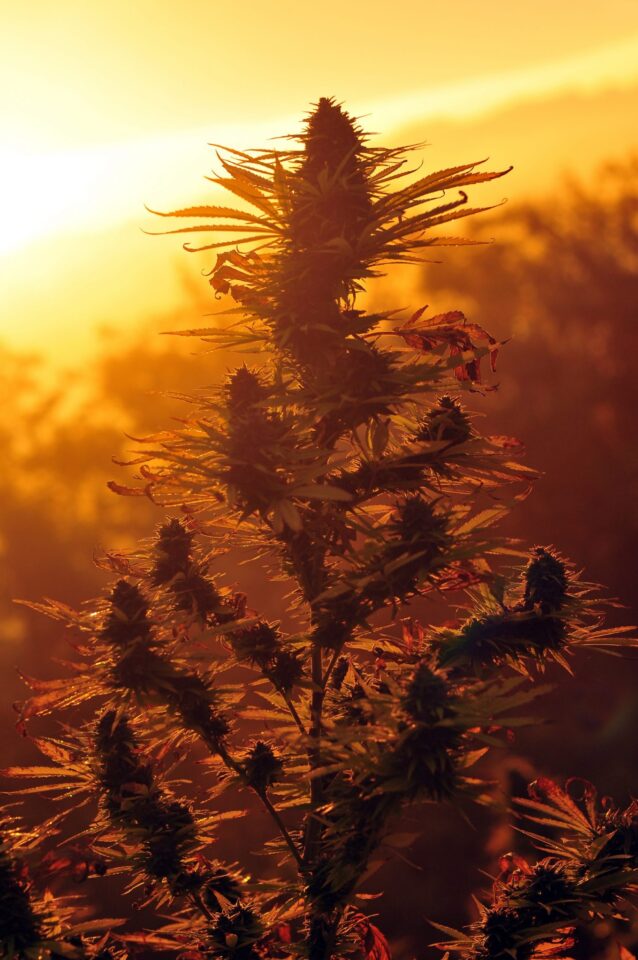
Cannabis plants naturally produce many cannabinoids in their acidic forms. THCa is one of those naturally occurring cannabinoid acids.
In fact, hemp plants can contain THCa along with other cannabinoids such as CBD, CBG, and their acidic counterparts.
So when you see THCa listed on a hemp flower lab report, you’re not looking at something that was necessarily added to the plant. It can be a naturally occurring component of the hemp plant.
Myth #3: THCa Flower Is Just Regular THC Flower
Not exactly.
THCa hemp flower and traditional high-THC cannabis flower can look and smell very similar, but their cannabinoid profiles can be quite different.
The important distinction is the amount of delta-9 THC present in the product and the amount of THCa that may convert to THC when heated.
This is also why it’s important to look at a product’s Certificate of Analysis (COA) instead of relying solely on the name of a strain or the marketing on a package.
At Peaceful Pines Hemp Farm, we believe customers should be able to see what’s actually in the products they’re purchasing.
Myth #4: THCa Doesn’t Change When You Heat It
Heat matters.
One of the most important things to understand about THCa is that it is sensitive to heat.
When THCa is heated, it can undergo decarboxylation and convert into delta-9 THC. Scientific research has demonstrated this conversion under controlled heating conditions.
This is why the way a THCa product is used can matter when considering its cannabinoid profile.
It’s also why laboratory testing methods distinguish between THCa and THC and may calculate total potential THC by accounting for the THCa that could convert to THC. USDA materials describe this calculation as part of hemp testing.
Myth #5: If a Product Has a High THCa Number, It Automatically Has a High THC Number
No.
This is where reading the COA becomes especially important.
A product can have a high percentage of THCa while having a relatively low amount of delta-9 THC in its unheated state.
However, because THCa can convert to THC when heated, laboratories and regulators may use a total THC calculation that accounts for both the THC already present and the THC that could potentially result from THCa conversion.
In other words, don’t look at one number on a lab report and assume it tells the entire story.
Myth #6: THCa Means “Non-Psychoactive,” So It Can’t Produce THC
This one needs a little clarification.
THCa itself is chemically different from delta-9 THC, but heating changes the equation.
When THCa is exposed to sufficient heat, it can decarboxylate and form delta-9 THC. This is why smoking, vaping, or other forms of heating cannabis can substantially change its cannabinoid profile.
So while it’s important to distinguish THCa from THC, it would be misleading to say that THCa and THC are completely unrelated or that THCa can never become THC.
Myth #7: All THCa Products Are the Same
Definitely not.
Just like other hemp products, THCa products can vary significantly.
Differences can include:
- THCa concentration
- Delta-9 THC concentration
- Other cannabinoids
- Terpene profiles
- Cultivation practices
- Processing methods
- Product quality
- Laboratory testing
Two products can both be marketed as “THCa flower” while having noticeably different cannabinoid and terpene profiles.
That’s why we always recommend looking beyond the product name and checking the available testing information.
Myth #8: You Don’t Need to Look at the COA
We strongly disagree.
A Certificate of Analysis, or COA, provides valuable information about what’s actually present in a hemp product.
Depending on the product and laboratory, a COA may provide information about cannabinoids, potency, contaminants, pesticides, heavy metals, solvents, and other testing categories.
At Peaceful Pines Hemp Farm, we believe transparency matters. If you’re purchasing hemp, don’t be afraid to ask questions and look for testing information.
A trustworthy hemp company should be willing to tell you what’s in its products.
So, What’s the Takeaway?
THCa isn’t simply “THC with a different name.”
It’s a naturally occurring cannabinoid acid found in cannabis plants, including hemp. The major point of confusion is what happens when THCa is exposed to heat: decarboxylation can convert THCa into delta-9 THC.
That’s why understanding the difference between THCa, delta-9 THC, and total THC is so important when shopping for hemp products.
And when in doubt, check the COA.
At Peaceful Pines Hemp Farm, we’re committed to providing quality hemp products and giving our customers the information they need to make informed purchasing decisions.
Curious About THCa?
Explore our selection of THCa hemp products and take a look at the available testing information before choosing the product that’s right for you.
As always, follow all applicable federal, state, and local laws regarding hemp and cannabinoid products.