Walk into any dispensary or browse online, and you’ll notice something immediately:
cannabis flower isn’t all the same color.
Some buds look bright lime green. Others are deep forest green. Some glow with purple, pink, or even orange tones. So… does color actually tell you anything about quality?
Let’s break down what cannabis flower color really means — and what it doesn’t.
Whether you’re a seasoned smoker or completely new to the world of THCa and CBD flower, this guide will help you understand what you’re looking at (and how to choose better bud).
What Is Cannabis Flower?
Cannabis flower — often called bud — is the mature, resin-rich part of the cannabis plant harvested for smoking or vaporizing.
It contains:
- Cannabinoids (like THCa, CBD, CBG)
- Terpenes (aroma + flavor molecules)
- Trichomes (the frosty crystals responsible for effects)
The flower’s appearance can vary widely depending on genetics, growing conditions, curing, and handling.
And while color can tell part of the story, it’s not the full picture.
What Affects the Color of Cannabis Flower?
The color of cannabis buds is influenced by natural plant chemistry, environmental factors, and post-harvest handling.
Here’s what plays a role:
1. Genetics
Different strains naturally express different pigments.
Purples come from anthocyanins.
Orange hairs come from pistils.
2. Temperature
Cooler temperatures (especially at night) can make buds turn purple.
Warmer temps tend to produce green or orange tones.
3. Light Exposure
Too much light bleaches buds.
Too little light darkens them.
4. Nutrients
Some nutrient blends enhance pigment expression.
Nutrient deficiencies can also distort color.
5. Harvest + Cure
Proper curing preserves vibrant colors.
Poor curing dulls the bud to brown or tan.
Color is a sign of what happened during cultivation — not an indicator of potency.
What Do Different Cannabis Flower Colors Mean?
Here’s a breakdown of common colors and what they may signal:
Bright Green
Healthy, well-grown flower.
Usually high in chlorophyll and harvested at peak ripeness.
Deep Forest Green
Often indicates indica-leaning genetics or denser, heavier buds.
Purple
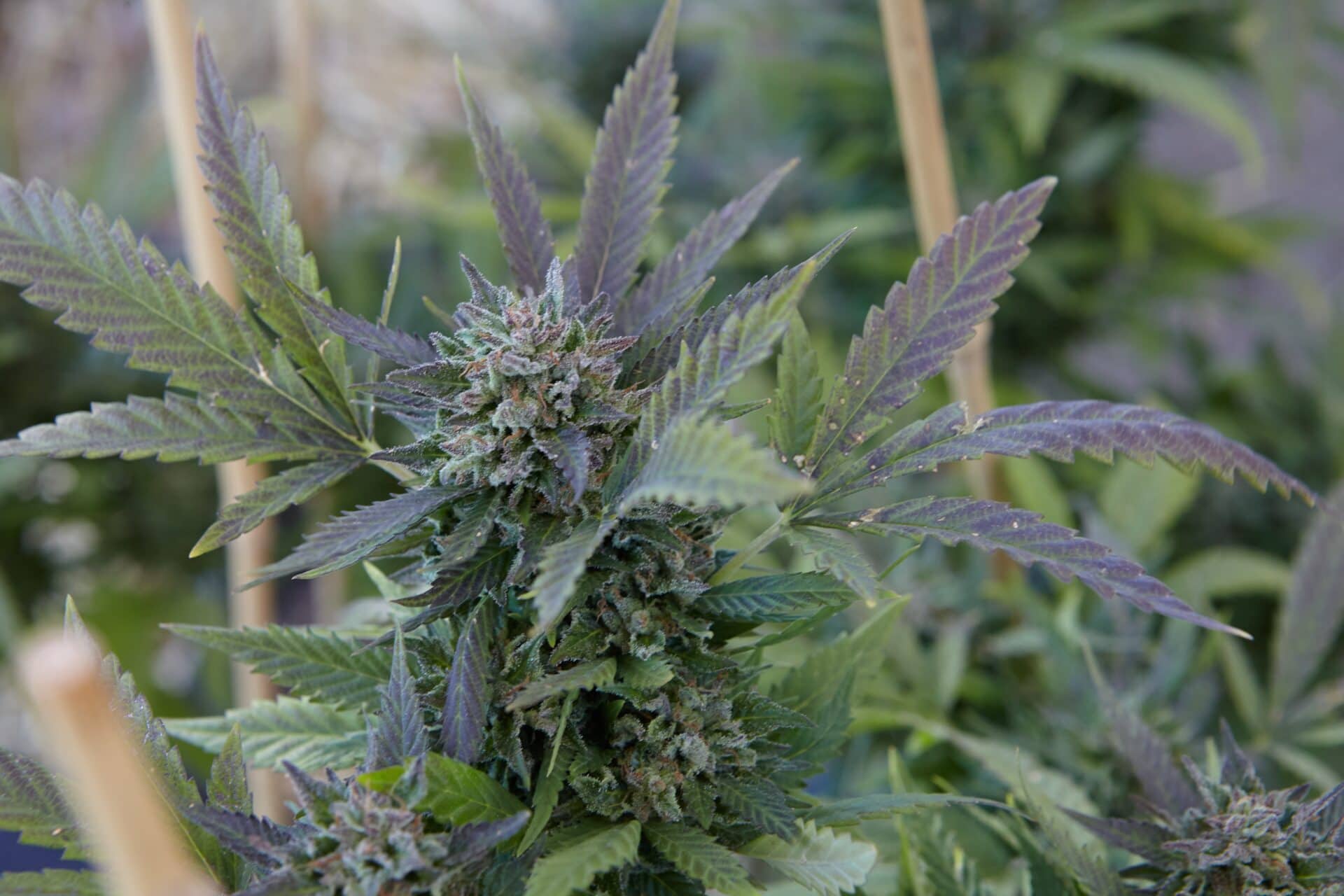
Comes from anthocyanins (same pigment in blueberries).
Not stronger — just genetically unique.
Cold temperatures help reveal purple tones.
Orange or Red Hairs
These are pistils — the reproductive parts of the flower.
Their darkening indicates maturity, not potency.
Yellow or Lime Green
May come from genetics or high light exposure.
Sometimes indicates sativa-leaning strains.
Brown
Usually a sign of age, oxidation, or poor curing.
Not always harmful, but rarely premium quality.
Frosty White or Silver
This isn’t color — it’s trichomes — and THIS is what really matters.
Which leads us to the most important part…
Are Trichomes a Better Way to Judge Cannabis Flower Quality?
YES.
100%, yes.
While color is interesting, trichomes tell the real story.
Trichomes = Quality Indicators:
- Loaded with cannabinoids
- Full of terpenes
- Responsible for potency
- Sticky, shiny, and aromatic
What you want to see:
- Buds coated in milky or cloudy trichomes
- Sparkly resin crystals under light
- A frosty appearance
- Sticky texture when broken apart
What you don’t want:
- Buds with clear (underripe) trichomes
- Buds with amber/brown (overripe) trichomes
- Buds that feel dry or dusty
Bottom line:
Frost > Color.
What’s the Difference Between Male and Female Cannabis Flowers?
This matters for growers and quality control:
Female Flowers
- Produce smokable buds
- Covered in trichomes
- Contain cannabinoids
- Used for THCa and CBD flower
Male Flowers
- Produce pollen sacs
- Used for breeding
- Have almost no cannabinoids
- Do NOT produce smokable buds
Commercial hemp flower should always come from female plants.
Should You Choose Cannabis Flower by Color or Strain?
Color is fun to look at, but strain tells you far more.
Strain influences:
- Aroma
- Flavor
- Cannabinoid profile
- Terpenes
- Effects
- Experience (daytime vs nighttime)
Color does not determine:
- Potency
- Quality
- Freshness
- Flavor profile
- Strength
So if you’re choosing between two pretty buds?
Check the strain, the trichomes, and the COA — not the color.
How Can You Evaluate Cannabis Flower Quality?
Here’s a simple checklist for beginners and experienced smokers:
✔ 1. Look for Trichomes
Frosty > colorful.
A good bud should sparkle.
✔ 2. Smell the Flower
A strong aroma means healthy terpenes.
Muted smell = older or poorly stored bud.
✔ 3. Check the Cure
Should feel slightly sticky — not dry, not wet.
Breaks apart cleanly without turning to dust.
✔ 4. Look at the Trim
Clean trim = premium quality.
Leafy = lower grade or rushed processing.
✔ 5. Check the COA
Lab results confirm:
- Cannabinoid potency
- Terpene levels
- Contaminant-free safety
- Legality (for THCa flower)
✔ 6. Observe the Color — But Don’t Obsess Over It
Color should look natural, not bleached or browned.
Conclusion: Is Color a Reliable Way to Judge Cannabis Flower Quality?
Color can tell you something, but it doesn’t tell you everything.
In fact:
- Purple doesn’t mean stronger.
- Green doesn’t mean fresher.
- Orange hairs don’t mean better.
If you want reliable indicators of cannabis flower quality, check:
- trichomes
- aroma
- cure
- COAs
- strain genetics
Color is a fun part of the experience, but quality lives in the details — and in the trichomes.
*These statements have not been evaluated by the FDA. This product is not intended to diagnose, treat, cure, or prevent any disease.
Related readings:
What Is THCa?
How to Read a COA